Making a literacy assessment usable for educators and schools
I collaborated with a research team at Stanford University to support the communication and implementation of a reading assessment designed to measure foundational literacy skills. The tool produced reliable data, but educators needed clear guidance on what results meant and how to respond instructionally.
The project required translating research concepts into materials usable across multiple audiences — teachers, administrators, and school partners — while preserving scientific accuracy.
The Challenge
The assessment measured several distinct reading skills, but educators typically experienced results as isolated scores. Without clear interpretation, the data risked being informative but not actionable.
The goal was not simply to explain the assessment, but to help educators understand:
what each skill represented
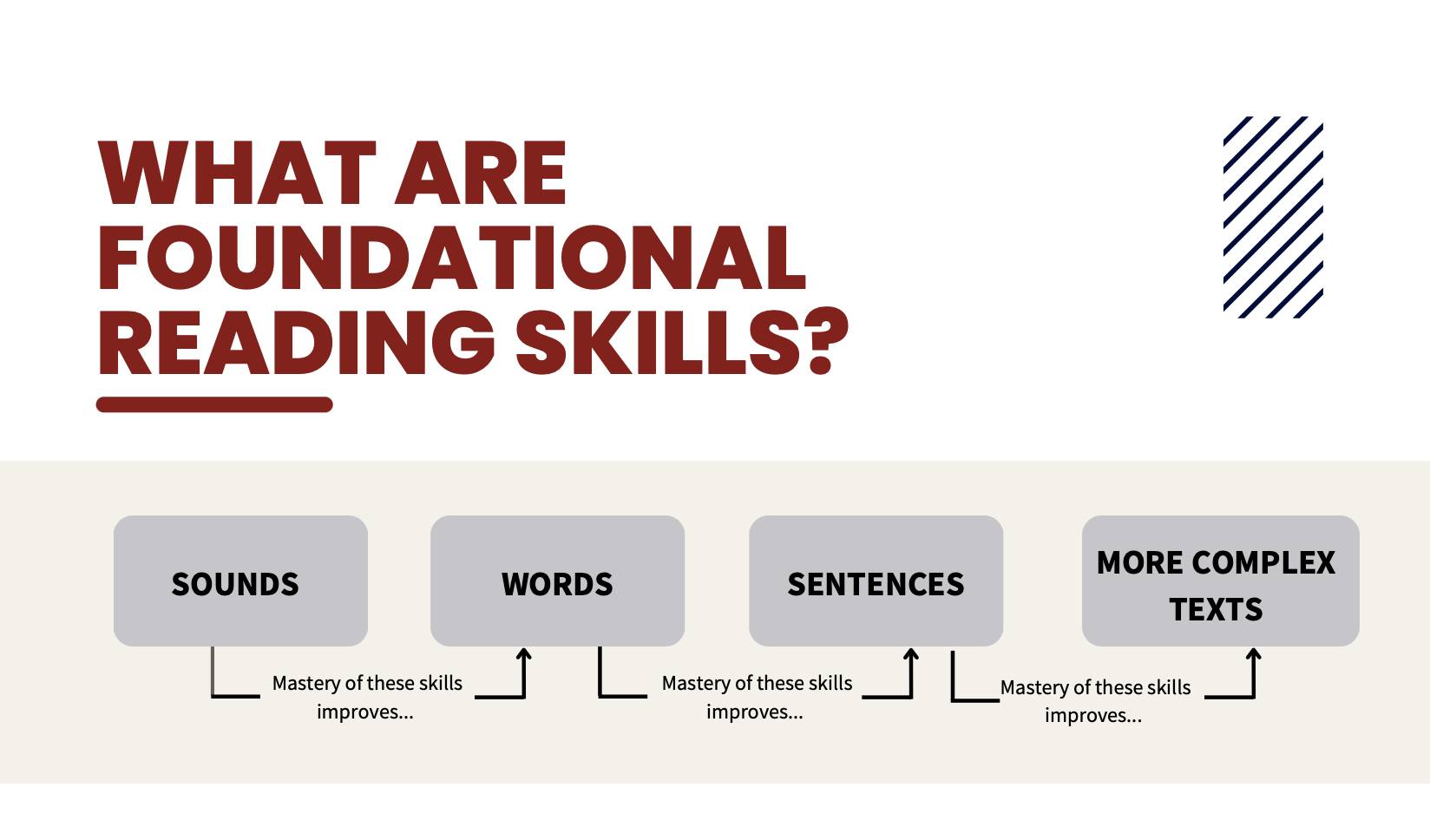
how the skills related to each other
when intervention was needed
what to do next
Structuring Understanding Before Instruction
Rather than beginning with instructions, I first organized the materials around a mental model of reading development.
The guide introduces how foundational skills build on each other so later recommendations would feel logical rather than arbitrary.
Turning scores into decisions
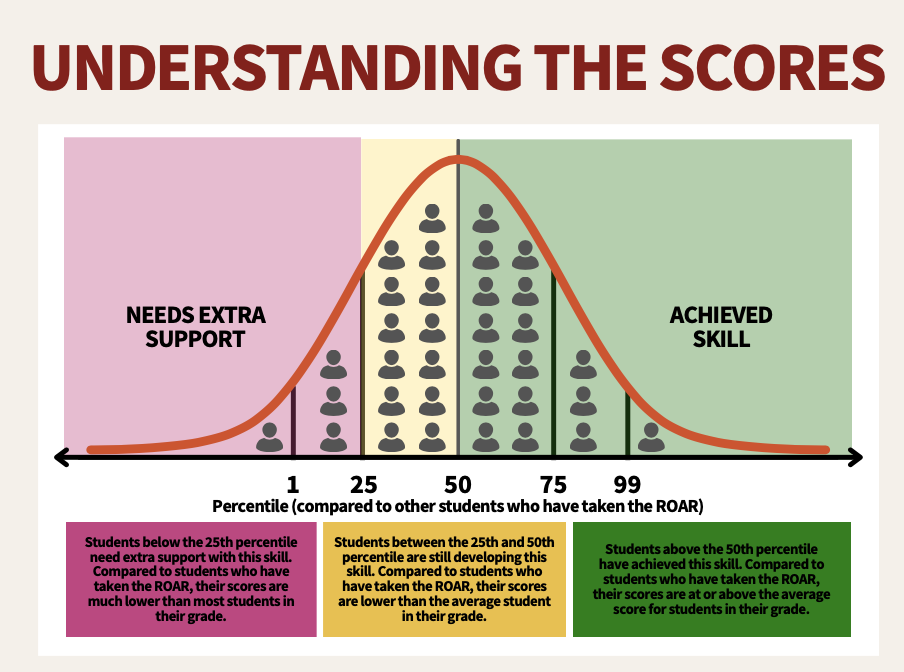
Teachers often struggle to interpret assessment percentiles. Instead of presenting raw statistics, scores were grouped into support categories to guide action.
This allowed educators to quickly determine whether a student required targeted support, continued monitoring, or no intervention.
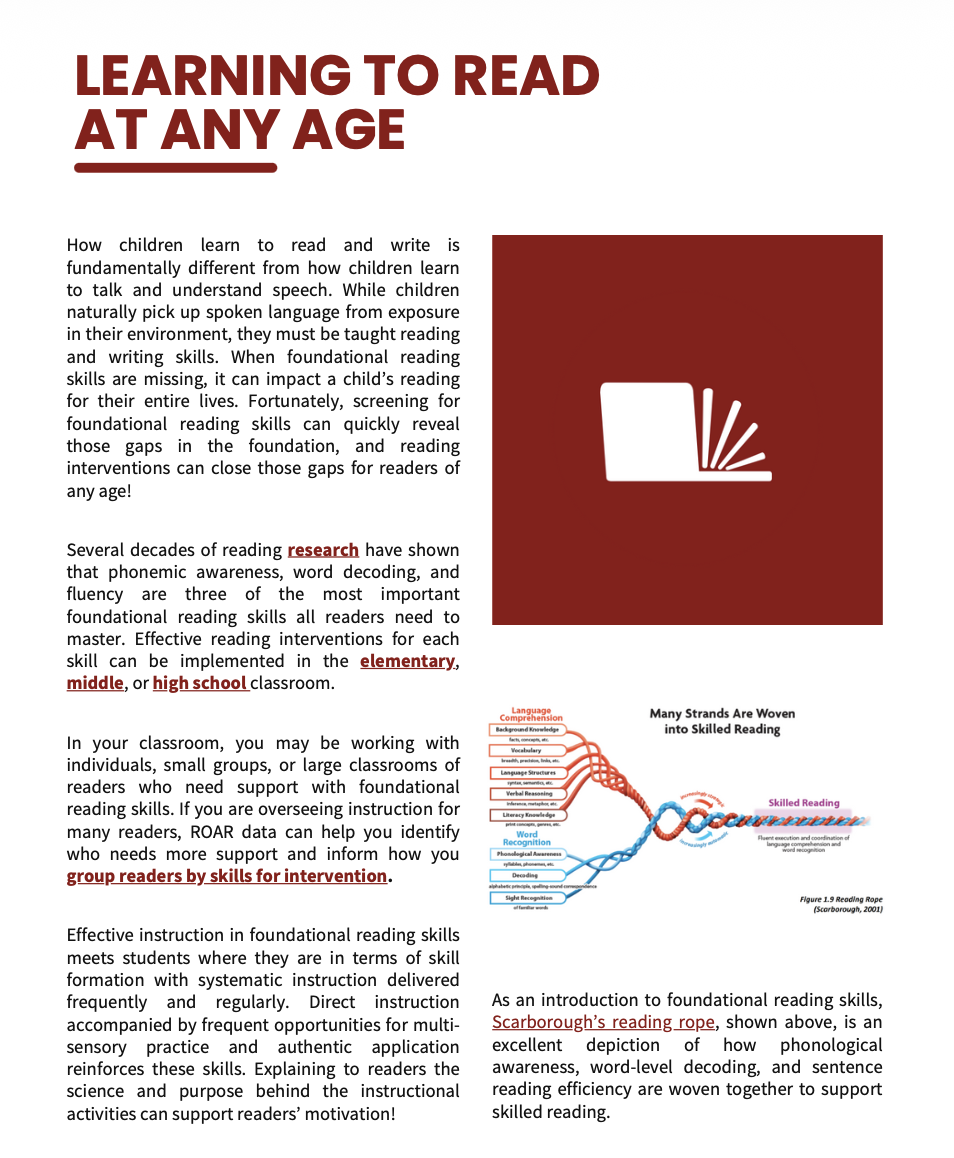
Connecting research to classroom action
The materials translated assessment constructs into instructional implications.
Rather than describing abilities abstractly, the communication linked specific skill gaps to practical teaching strategies.
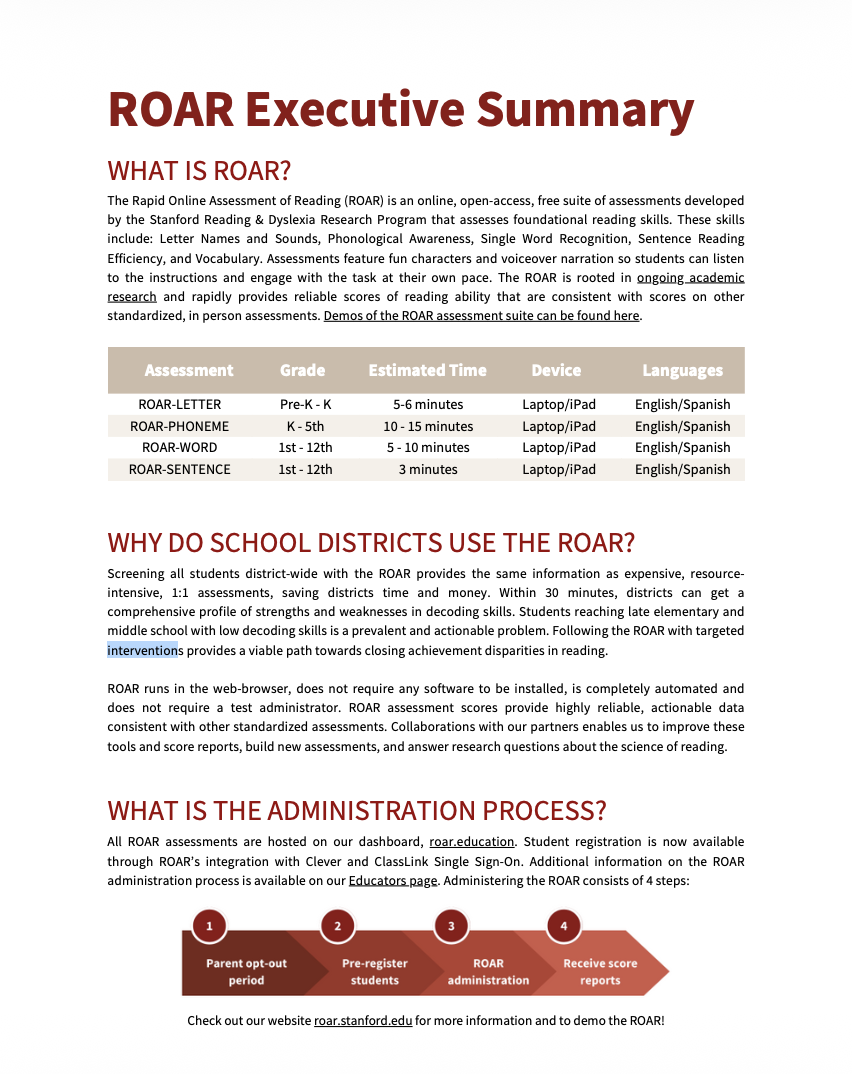
Adapting communication across audiences
Different stakeholders required different levels of detail.A concise overview was created for partners and administrators.
The same research was therefore understandable to both practitioners and decision-makers.
Outcome
The project created a communication pathway:
research findings → interpretation → instructional action
Educators could independently understand results, identify student needs, and respond appropriately without additional training